

News

Maple for Chess Boards: The Light Counterpart to Walnut
While walnut takes care of the dark squares, another wood handles the light side on most classic chess boards: maple. Unassuming, but essential. What sets maple apart Maple is a fine-grained, light...
Read more
Walnut for Chess Boards: Properties and Advantages
Click through chess board listings for long enough, and you'll run into the same name almost everywhere: walnut. That's no accident — few woods balance looks, stability, and availability quite so w...
Read more
Oil Finish or Lacquer: Which Finish Lasts Longer on Chess Pieces
Two chess pieces made from the same wood can feel and age completely differently — the difference often comes down to the surface treatment. Oil finish and lacquer are the two most common methods, ...
Read more
Felt Bottoms on Chess Pieces: A Small Detail, A Big Difference
When judging a chess set, the first things you notice are wood type, color, and the shape of the pieces. One detail is often overlooked, even though it reveals a lot about the actual quality of the...
Read more
Chess Piece Weight Explained: What Lead Weighting Actually Does
Anyone starting to explore high-quality chess pieces quickly runs into a confusing range of weight figures — anywhere from a light 20 grams to over 90 grams per king. Without a point of comparison,...
Read more
Ebony in Chess Pieces: Why It's the Standard for Black
Anyone exploring high-quality chess pieces will almost inevitably come across ebony — the material that has been the standard for dark pieces for generations. But what makes this wood so special, a...
Read more
Rosewood in Chess Pieces: Properties and Care
Rosewood is one of those woods that has become almost synonymous with luxury in the world of high-quality chess pieces. The dark, often reddish-brown grain with fine dark veins makes every piece on...
Read more
Solid Wood or Veneer: The Difference You Only Notice Later
They look the same in a photo — not after ten years. How to tell whether a chess board is genuinely solid wood or just veneered.
Read more
Weighted Chess Pieces: Why Weight Determines How the Game Feels
Metal in the base, felt underneath: why weighted chess pieces change how the game feels — and how to spot good pieces just by holding them.
Read more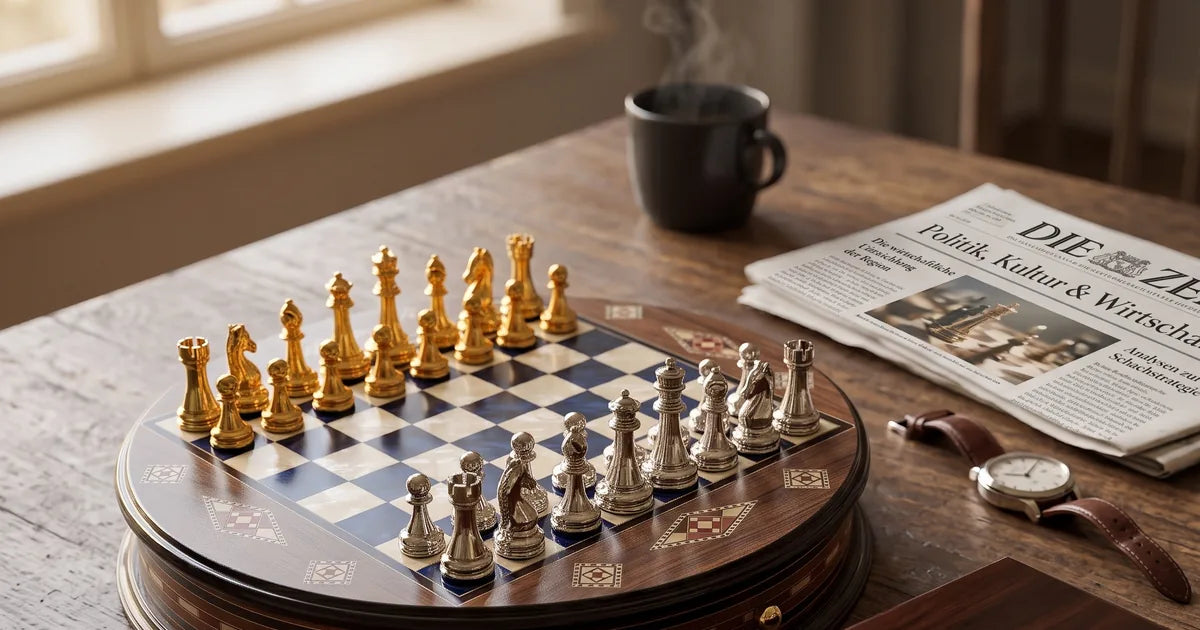
Handcrafted or Mass-Produced: How to Actually Tell the Difference
The knight gives everything away: how to spot genuine handwork, what machines actually do better — and why irregularity is a mark of quality.
Read more