Handmade Christmas Gifts: Why We Start Looking for Craftsmanship in November
It happens every year in November. You're walking through a holiday market or craft fair, past mulled wine and string lights, and you stop at a stall. A wooden bowl, a carved figure, something you can tell someone actually sat down and made.
You pick it up, feel the weight of it in your hand — and you know immediately: this is something different from what's on the shelves at the mall.
Why we go looking for handmade things in November
It's no accident that the pull toward craftsmanship shows up right around the holidays. The rest of the year, we buy fast, online, functional. Then comes the one stretch when it's not about efficiency anymore — it's about meaning.
And suddenly you notice: something a machine made in seconds is hard to give as a gift. Not because it's bad. Because it doesn't tell you anything.
What makes handmade different
It has an origin. Someone made it. You can say where it came from — and that's part of the gift itself.
It isn't perfect. And that's the point. Small irregularities aren't flaws — they're the signature of the hand that made it.
It ages. Solid wood darkens, develops patina, gets more beautiful. Mass-produced goods just get older.
It's one of a kind. No second piece is exactly the same. In a world of identical products, that's become genuinely rare.
The problem with holiday markets
Honestly: not everything sold as “handmade“ at these markets actually is. Between the genuine makers, there are stalls selling imported goods that just look the part. The mulled wine makes you generous — and back home, under regular light, the piece can look different.
It's worth asking the same questions here as anywhere: What material? Solid or veneered? Who actually made this? If nobody can answer, it isn't real craftsmanship.
Why a chess set belongs in this category
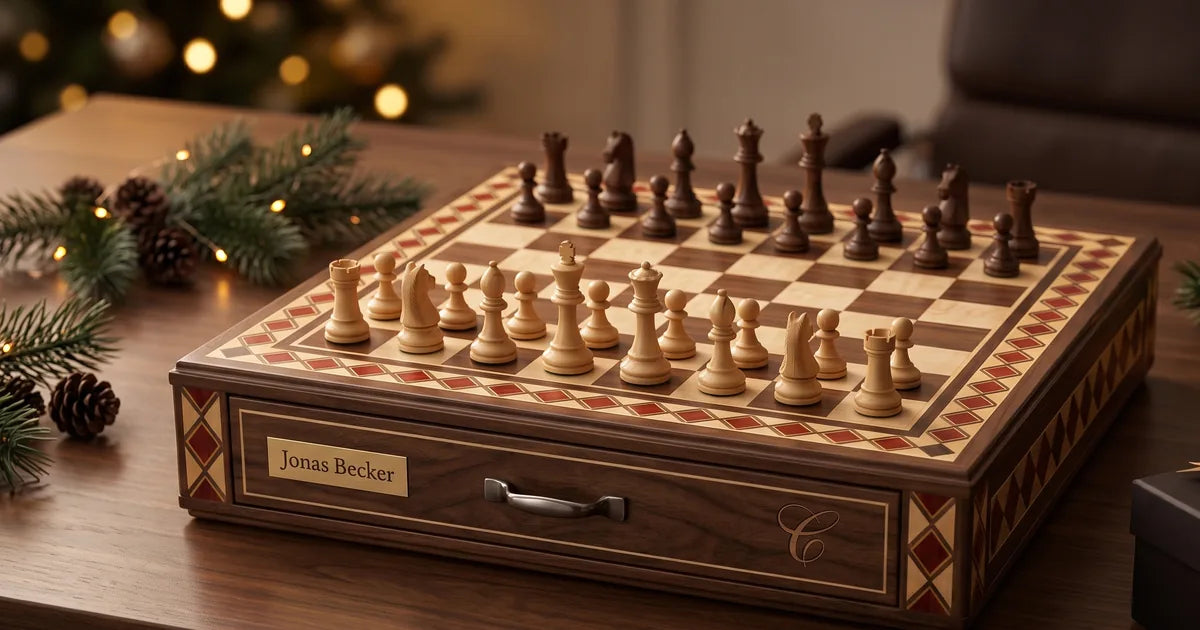
It checks every box people are looking for in November. It's made of wood, it's crafted rather than manufactured, it has real weight in the hand. And it has something a carved decorative figure doesn't: it gets used.
A handcrafted chess set isn't an object that collects dust on a shelf. It gets set up on Christmas evening — and then every Sunday after that.
The advantage of thinking ahead
If you want to give something handmade, you can't decide that on December 22nd. Handwork takes time — especially with engraving involved. November is the right window: you still have the room to find the right thing instead of settling for what's left.
The engraving as the final piece of handwork
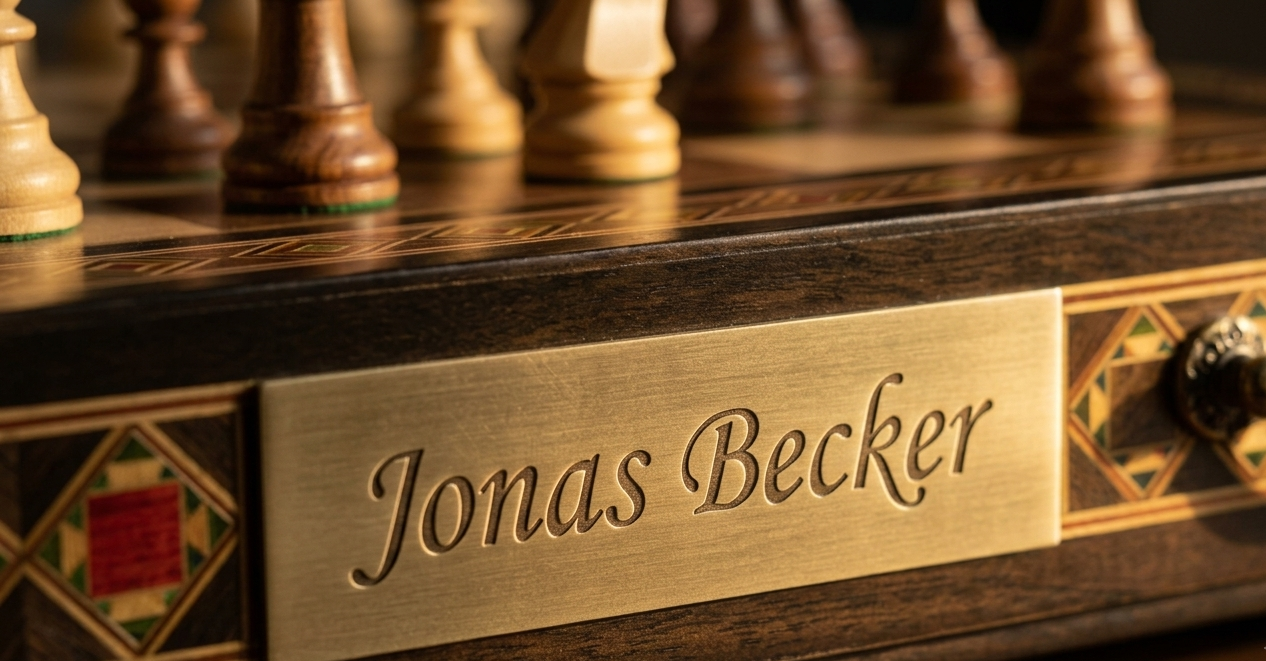
At Schachatelier, we engrave a personal dedication into the wood at no extra cost, on request. It's the last step that turns a handcrafted piece into a piece made for exactly one person.
Schachatelier: at home in Berlin
Schachatelier is at home in Berlin. Every set is genuinely handcrafted by experienced makers — in solid wood, with knights that get their character from a human hand.
→ Explore handcrafted chess sets
Frequently Asked Questions
How can you tell if a wooden gift is genuinely handmade?
By the answer to three questions: What material? Solid or veneered? Who actually made it? Small irregularities are another good sign — they're the signature of real handwork.
Why are handmade Christmas gifts more meaningful?
Because they have an origin and tell a story. They're one of a kind instead of identical, and they age beautifully instead of wearing out — exactly what people start looking for around the holidays.
When should you order a handcrafted gift?
As early in November as possible. Handwork and engraving both need lead time; deciding at the last minute means settling for whatever's left instead of choosing the right piece.